

Companies House forms
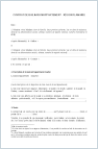
Companies must keep the records at Companies House up to date with certain changes. Use our handy table to make sure you know what to file and when.
What needs filing?
Broadly speaking, if there is a significant change in a company’s make-up, Companies House will need to be notified. Companies House produces forms to use to make sure that all of the relevant information is included. Filing requirements are imposed by the Companies Act 2006, and failure to file some documents can even result in criminal prosecution.
Our table sets out the forms needed for the common events in a company’s life, along with their deadlines and any enclosures and fee required. There are also forms for less common events, such as dissolving a company.
Get it right
There are deadlines for many of the forms, and in some cases the change in question is ineffective until the paperwork has been registered at Companies House. The forms relating to mortgages and charges are particularly strict on the deadline and content (you need a court order to file out of time, for example). This is one of the reasons it will usually be your professional advisor who files these forms.
For all forms it is important to fill them out correctly and enclose any required documents. Each form is annotated with explanations where necessary and a checklist at the bottom to help make sure you have remembered everything.
There is a filing fee for some forms, as noted in the table. They differ depending on the method of filing and can change.
Next steps
The forms (online and paper versions) can be found at: https://tinyurl.com/yce2ulue and the applicable fee here: https://tinyurl.com/ycck9shp
Related Topics
-
Updated guidance on mandatory payrolling of benefits in kind
Much like the rollout of mandatory payrolling of benefits in kind, HMRC guidance on the matter is coming in dribs and drabs. What's the latest?
-
Give your children a cheap mortgage
Your son is struggling to get on the property ladder and current mortgage interest rates are making it harder. You’re over the inheritance tax (IHT) threshold but you’re reluctant to give him the money because you’ve heard horror stories about others losing half of it in a divorce. Is a family loan the solution for both of you?
-
Loan Charge settlement offers begin to land
HMRC has begun sending formal settlement offers to individuals and employers with outstanding Loan Charge liabilities, alongside detailed new guidance explaining how offers will be calculated and how long recipients have to respond. What’s the full story?




 This website uses both its own and third-party cookies to analyze our services and navigation on our website in order to improve its contents (analytical purposes: measure visits and sources of web traffic). The legal basis is the consent of the user, except in the case of basic cookies, which are essential to navigate this website.